Design Guidance
Designing a garden is a process that integrates aesthetic and functional elements to create a visually appealing and enjoyable space. The design principles discussed and depicted here can serve as a foundation for thoughtful and cohesive gardening decisions.
Unity
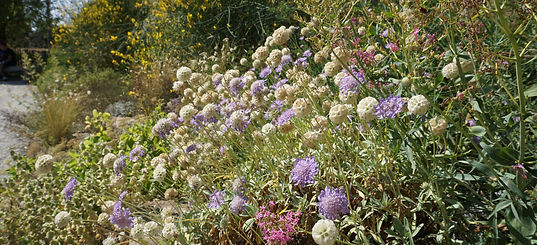
Unity ensures that all elements of the garden work together to create a cohesive whole. This can be achieved by using consistent materials, colors, and styles that complement the overall theme. For example, in a Mediterranean Garden, the use of silvery drought tolerant plants can reinforce the theme, providing a sense of cohesion.
Harmony
Harmony ensures that the various elements of a garden blend naturally with one another and with the surrounding environment. It emphasizes compatibility, creating a soothing and seamless flow. For instance, a woodland garden may harmonize with a site surrounded by trees.

Contrast
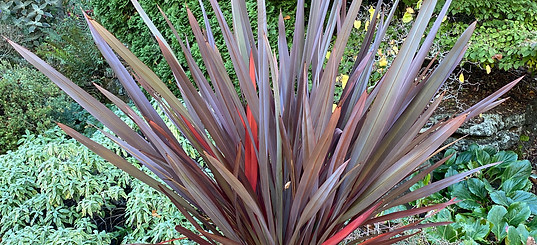
Contrast adds visual interest and prevents monotony by combining opposing elements. This can include pairing plants with different textures, colors, or shapes. For instance, the bold, upright form of New Zealand Flax can contrast beautifully with a solid backdrop of dense greens.
Repetition
Repetition creates consistency and rhythm in the garden, guiding the eye and establishing order. Repeating plants, colors, or patterns helps tie different areas of the garden together. For example, planting a consistent ground layer throughout a site can unify the garden.

Rhythm
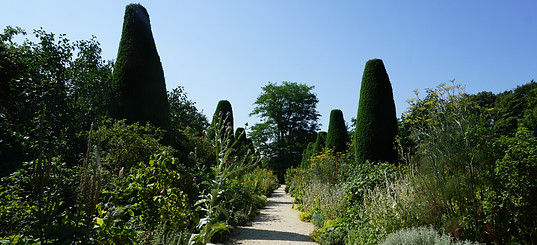
Rhythm in garden creates a sense of movement or stability, leading or anchoring the eye in a deliberate way. This can be achieved through alternating elements, such pots or clipped shrubs.
Balance
Balance ensures visual stability in the garden by evenly distributing elements. This can be achieved through symmetry (formal balance) or asymmetry (informal balance). A symmetrical garden might feature identical plantings on either side of a central axis, while an asymmetrical design might balance a large tree with a cluster of smaller plants. Balance can also be applied to aspects such as mass, volume, void and colour.

Proportion
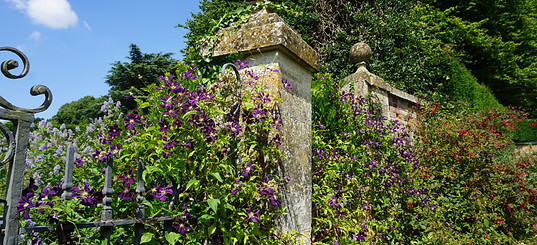
Proportion focuses on the size relationship between elements in the garden. It ensures that all components, from plants to furniture, are appropriately scaled relative to each other and the overall garden size. For instance, a large gate may feel overbearing unless consumed by expansive planting.